🎓 2nd Round Admission Open – Apply Now! Limited Seats Available.

Education plays a significant role in shaping a student’s future. It helps children develop knowledge, practical skills, confidence, and values that prepare them for personal and professional success. However, the effectiveness of education depends on several factors beyond textbooks and examinations.
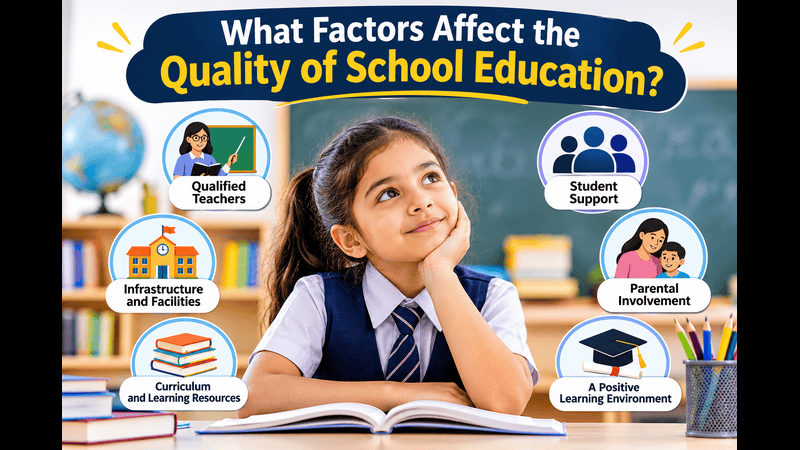
The quality of education is influenced by teachers, school infrastructure, teaching methods, curriculum, parental involvement, and the overall learning environment. When these elements work together, students are more likely to achieve academic success and develop essential life skills.
Understanding these factors helps parents, teachers, and educational institutions improve learning experiences and create better opportunities for students.
1. Qualified and Experienced Teachers
Teachers are among the most important contributors to quality school education. Their subject knowledge, communication skills, and teaching experience directly influence students’ understanding and academic progress.
Qualified teachers can explain difficult concepts clearly, identify learning difficulties, and provide individual guidance when necessary.
Regular professional development and training also help teachers adopt modern teaching techniques, use educational technology, and respond to changing learning requirements.
A supportive teacher encourages students to ask questions, participate in discussions, and develop confidence in their abilities.
2. School Infrastructure and Facilities
A well-maintained school environment supports effective learning. Classrooms with proper lighting, ventilation, comfortable seating, and sufficient space help students concentrate.
Facilities such as libraries, science laboratories, computer rooms, playgrounds, and clean drinking water contribute to a better educational experience.
Technology-enabled classrooms can also improve learning when digital resources are used appropriately.
Schools should ensure that infrastructure is safe, accessible, and regularly maintained. Proper sanitation facilities and inclusive infrastructure are particularly important for students’ health, comfort, and participation.
3. Effective Teaching and Learning Methods
Teaching methods have a significant impact on how students understand and retain information.
Traditional classroom instruction can be effective, but combining it with interactive learning activities often improves student engagement.
Methods such as group discussions, practical experiments, project-based learning, educational games, and classroom presentations encourage students to participate actively.
Teachers should recognise that students have different learning abilities and preferences. Providing additional support, constructive feedback, and opportunities for practical application can help students develop a deeper understanding of subjects.
4. Curriculum and Educational Resources
A balanced and relevant curriculum provides the foundation for meaningful learning.
School subjects should help students develop academic knowledge alongside critical thinking, communication, creativity, and problem-solving skills.
Updated textbooks, reference materials, digital resources, and library facilities allow students to explore subjects more effectively.
A comprehensive curriculum should also include sports, arts, environmental awareness, and extracurricular activities.
These activities support students’ physical, emotional, and social development while helping them discover their interests and abilities.
5. Student-Teacher Ratio
The number of students in a classroom can influence the quality of teaching and individual attention.
In smaller classrooms, teachers may find it easier to understand students’ learning needs, answer questions, and monitor academic progress.
Overcrowded classrooms can make classroom management and personalised instruction more challenging.
An appropriate student-teacher ratio allows teachers to encourage participation, identify difficulties, and provide guidance more effectively.
However, classroom quality also depends on teaching practices, available resources, and the overall learning environment.
6. Parental Involvement and Support
Parents play an important role in supporting children’s educational development.
A positive home environment, regular study routines, encouragement, and communication with teachers can help students remain motivated.
Parents should take an interest in school activities, monitor academic progress, and encourage children to develop good learning habits.
Rather than focusing only on examination marks, families should appreciate effort, curiosity, creativity, and improvement.
A supportive relationship between parents and teachers helps identify learning challenges early and provides students with consistent guidance.
7. School Management and Learning Environment
Effective school management ensures that educational activities are organised and resources are used appropriately.
School leadership influences teacher performance, discipline, safety, infrastructure, and educational planning.
A positive school environment should promote respect, equality, inclusion, and emotional well-being.
Students should feel comfortable expressing their ideas, asking questions, and participating in activities without fear of discrimination or bullying.
Strong leadership and effective communication between teachers, parents, and administrators contribute to a supportive educational environment.
Importance of Quality Education
The importance of quality education extends beyond academic achievement. It helps students develop practical skills, confidence, responsible behaviour, and the ability to make informed decisions.
Quality education creates opportunities for higher studies, career development, and personal growth. It also promotes social equality by helping students from different backgrounds access meaningful learning opportunities.
Educational institutions that focus on holistic development prepare students to face future challenges with confidence and responsibility.
Conclusion
The quality of school education depends on several interconnected factors, including qualified teachers, modern infrastructure, effective teaching methods, relevant curricula, parental involvement, and responsible school management.
By improving these areas, educational institutions can create an environment where students develop academically, socially, and emotionally.
CSSGI recognises the importance of quality education in building strong foundations for lifelong learning. A balanced educational approach that combines academic excellence with practical skills and personal development can help students achieve their full potential.