🎓 2nd Round Admission Open – Apply Now! Limited Seats Available.

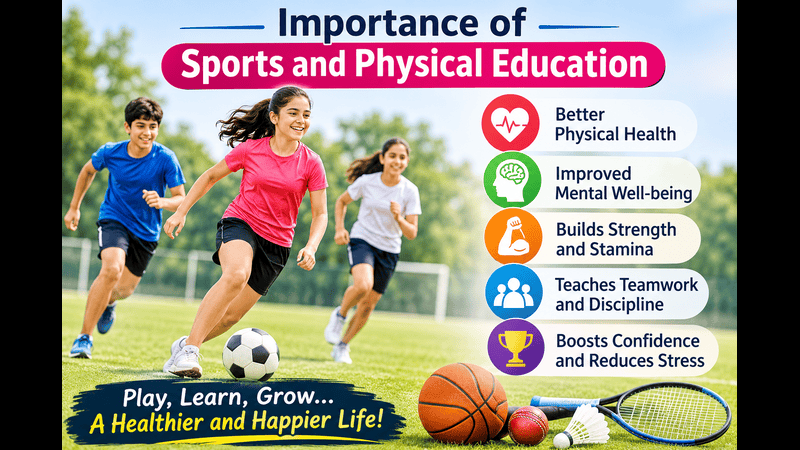
Education is not limited to textbooks, examinations, and classroom learning. A well-rounded education also focuses on physical fitness, mental well-being, teamwork, and character development. Sports and physical education play a vital role in helping students develop these essential qualities while maintaining a healthy lifestyle.
In today’s technology-driven world, many children spend considerable time using mobile phones, computers, and other digital devices. Regular physical activity helps students remain active, improve concentration, and develop healthy habits from an early age. Therefore, schools should give sports and physical education the same importance as academic learning.
Understanding the benefits of physical education can help parents, teachers, and educational institutions create an environment that supports students’ overall development.
1. Promotes Physical Fitness and Healthy Living
One of the most important advantages of sports is improved physical health. Activities such as running, swimming, football, basketball, and yoga help students develop strength, flexibility, coordination, and endurance.
Regular exercise supports healthy growth, strengthens muscles and bones, and contributes to maintaining a healthy body weight. It can also reduce the risks associated with a sedentary lifestyle.
When schools encourage daily physical activity, students are more likely to develop habits that benefit their health throughout adulthood. Physical education also teaches children the importance of warm-ups, exercise routines, hydration, and personal fitness.
2. Improves Mental Health and Emotional Well-Being
Sports can positively influence students’ emotional well-being. Physical activity can help reduce stress, improve mood, and provide a healthy way to manage everyday academic pressures.
Participating in outdoor games and team activities also gives students opportunities to interact with their classmates, enjoy themselves, and build meaningful friendships.
Sports teach children how to manage emotions, remain patient, and respond constructively to challenges. These experiences can help students develop confidence and resilience, which are valuable both inside and outside the classroom.
3. Enhances Academic Performance and Concentration
Physical education and academic learning complement each other. Regular physical activity can support attention, memory, and other cognitive functions that contribute to effective learning.
Students who participate in sports may find it easier to manage their time, follow instructions, and maintain focus during classroom activities.
Sports also provide a refreshing break from prolonged study sessions, helping students return to academic tasks with renewed energy. Schools should therefore view physical education as a valuable part of the learning process rather than simply an extracurricular activity.
4. Develops Teamwork and Leadership Skills
Team sports teach students how to cooperate, communicate, and work towards a shared objective. Activities such as volleyball, cricket, football, and basketball require players to understand their responsibilities and respect the contributions of others.
Students also learn leadership by motivating teammates, making decisions under pressure, and helping their teams overcome difficulties.
These skills are useful beyond school life. Whether students pursue higher education, professional careers, or entrepreneurial opportunities, teamwork and leadership can help them work effectively with different people.
5. Builds Discipline and Self-Confidence
Success in sports requires consistent practice, patience, and dedication. Students learn that improving their performance takes time and that progress often comes through repeated effort.
Following rules, attending practice sessions, and respecting coaches encourage discipline and responsibility.
Sports also teach students how to deal with victories and defeats. Winning can build confidence, while losing can provide opportunities to identify weaknesses and improve.
This ability to learn from setbacks helps students develop a positive attitude towards challenges and encourages them to keep working towards their goals.
6. Encourages Social Skills and Healthy Competition
Sports activities in schools create opportunities for students to interact with classmates from different backgrounds and with different abilities.
Through games, students learn fairness, respect, cooperation, and good sportsmanship. They also discover the importance of following rules and appreciating the efforts of others.
Healthy competition motivates students to improve their performance without treating every outcome as a measure of personal worth. Schools should ensure that sports programmes remain inclusive, safe, and accessible to students with different interests and physical abilities.
7. Supports Holistic Student Development
The role of sports in student development extends beyond physical fitness. Sports help nurture important life skills, including problem-solving, decision-making, emotional control, and perseverance.
Physical education also allows students to explore their interests and discover athletic abilities they may not recognise through classroom learning alone. Some students may develop an interest in professional sports, coaching, fitness, or related career opportunities.
Schools can support this development by providing suitable playgrounds, trained physical education teachers, appropriate equipment, and opportunities to participate in different sports.
How Schools Can Promote Sports and Physical Education
Educational institutions can encourage participation by organising regular physical education classes, inter-house competitions, annual sports days, yoga sessions, and outdoor recreational activities.
Schools should offer a variety of activities so that students can discover sports they enjoy. Teachers and coaches should focus on participation, personal improvement, safety, and fair play rather than winning alone.
Parents can also support these efforts by encouraging children to remain physically active and balancing screen time with outdoor activities.
Conclusion
Sports and physical education are essential components of a well-rounded school education. They improve physical fitness, support mental well-being, strengthen concentration, and help students develop teamwork, leadership, discipline, and confidence.
By incorporating regular physical activity into school routines, educational institutions can help children become healthier, more resilient, and better prepared for future challenges.
CSSGI recognises the importance of comprehensive education in supporting students’ academic, physical, social, and emotional growth. Encouraging sports alongside classroom learning can help create a positive educational environment where students have opportunities to develop their abilities and reach their full potential.